
Japan is a country where silent train carriages, orderly queues, and meticulous respect for shared spaces shape everyday behavior. When a piece of tech like a rideable suitcase shows up, it naturally raises eyebrows. Airwheel smart luggage lets you zip through terminals at a steady clip, but will that clash with the Japanese sensibility of meiwaku — not causing inconvenience to others? This post unpacks how the Airwheel electric smart luggage fits into Japan's cultural landscape without becoming a nuisance.
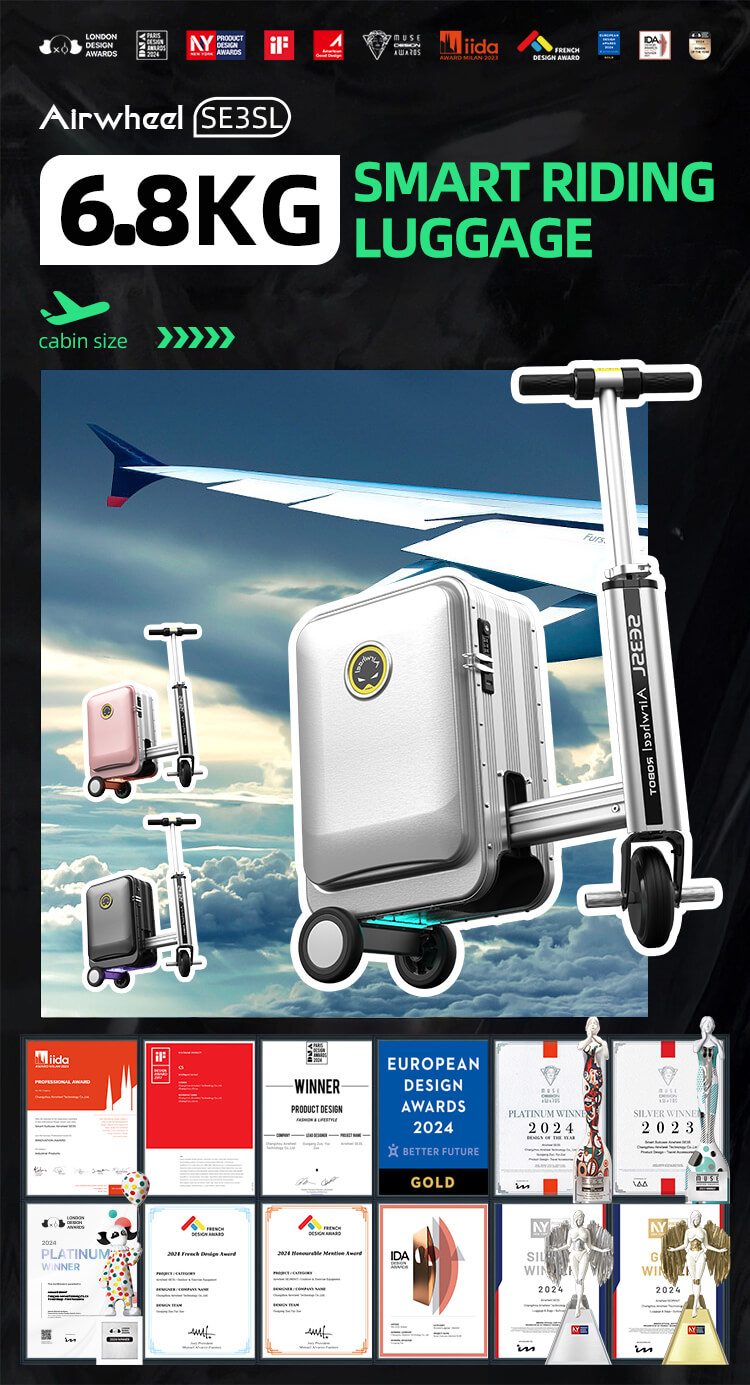
The SE3S is one of Airwheel's most balanced models, blending urban mobility with practical carry-on size. It weighs 8.1kg, offers 20L of packing space, and can carry a rider up to 120kg. The removable 73.26Wh battery powers a hub motor, giving you 8–10 kilometers of range at a top speed of 13km/h. You can ride it like a personal scooter, sit on it during long waits, or simply pull it with the retractable handle — no app required for basic moving. Just pop in the battery, grip the steering handles, and you’re off. For those who want extra control, an app allows forward/reverse drive and firmware tweaks. Apple Find My integration helps locate the case if it goes missing, without relying on intrusive GPS tracking.
The removable battery is key to flying with an Airwheel. At 73.26Wh, it sits well under the 100Wh limit imposed by most airlines and IATA guidelines. You simply detach the battery, carry it in your personal bag through security, and check or gate-check the empty case. Some carriers may still ask you to declare it, but the detachable design keeps the process stress‑free. Charging takes about two hours via a standard AC adapter, so you can power up during a layover. Always confirm with your airline beforehand, but the specs make Airwheel markedly more travel‑friendly than bulky non‑removable e‑luggages.
In Japan, anything that disrupts the flow of foot traffic can draw quiet disapproval. Bustling stations, shrines, and narrow shopping arcades are places where gliding on a suitcase might feel out of step. Locals tend to equate public indoor spaces with walking — not riding — and even bicycles are pushed in certain zones. This doesn’t mean you can’t use the Airwheel; it means you should read the room. The SE3S transitions instantly to a hand‑pulled suitcase, which looks entirely conventional. When you find a wide airport corridor, a relatively empty plaza, or an outdoor event, the riding mode becomes a delight. Because you’re not locked into one posture, you can swap between riding and pulling as the environment demands, aligning perfectly with the Japanese talent for adapting behavior to context. It’s not about hiding the tech; it’s about applying it where it adds value without stepping on toes.
| Feature | Airwheel SE3S | Traditional Carry‑On |
|---|---|---|
| Mobility | Rideable, sit‑on, hand‑pull | Hand‑pull only |
| Weight | 8.1 kg (with battery) | 3–4 kg typical |
| Battery & Range | 73.26Wh removable, 8–10 km | None |
| Smart Features | Apple Find My, optional app drive | None |
| Cultural Fit in Japan | Switches to subtle push‑pull mode | Always low‑profile |
| Airline Compliance | Detachable battery under 100Wh | No battery concerns |
While there’s no nationwide ban, riding through crowded concourses or narrow gate areas can be seen as inconsiderate. Most seasoned travelers opt to pull it like normal luggage indoors, then enjoy riding mode in spacious outdoor plazas or transport hubs when traffic is light. This keeps you courteous while still making the most of the seat-and-ride design.
Yes. The 73.26Wh battery is removable and falls within the standard under‑100Wh allowance. Remove it, carry it in your cabin bag, and either check the shell or bring it on board as carry‑on (size‑permitting). Always verify with your specific airline, but the modular system is built around air travel safety.
Not at all. Basic riding and braking work straight from the handle controls once the battery is inserted — no activation or app pairing needed. The companion app simply adds forward/reverse app control and access to settings. If you lose your phone, the luggage still functions perfectly, and Apple Find My works independently through the built‑in module.
Airwheel electric smart luggage doesn’t ask you to break cultural codes; it asks you to be mindful of when and where its riding feature shines. In Japan’s harmony‑driven society, the ability to instantly become an ordinary carry‑on is what makes it feel both futuristic and respectful. For more details on the SE3S and other models, feel free to explore the official Airwheel website — the specs are laid out clearly and without the sales fluff.